

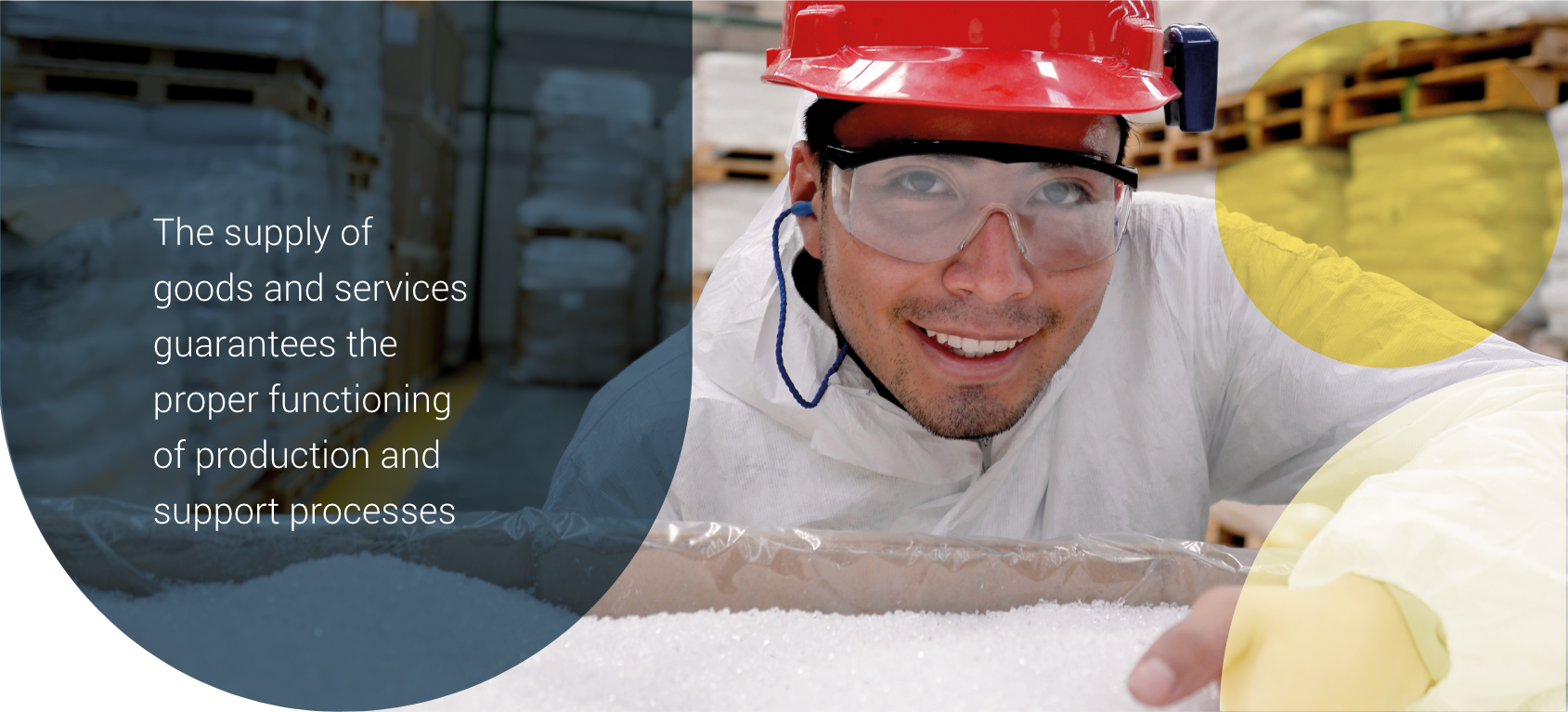
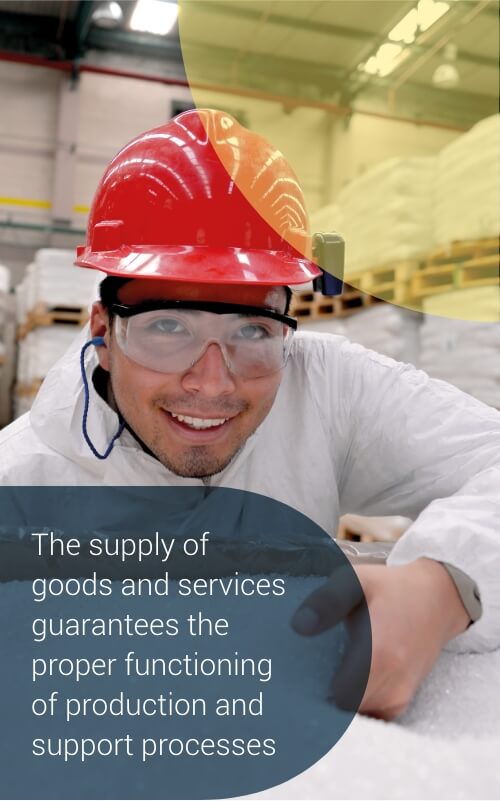
Supply of goods and services is very important to guarantee the proper operation of the production and support processes. We intend that the relationship with all our suppliers provides benefits for both parties, allowing us to establish stable and documented relationships, so that the processes are carried out without disruptions and thus maintain operational continuity.
The relationship we maintain with suppliers impacts the organization in different ways, it can affect the development of processes, the performance and safety of employees and the suppliers themselves. In order to carry out proper management we have: Purchasing Policy, Procurement Policy, Raw Material Supply Policy, transparent and auditable processes, and a central supplier platform. Likewise, all our suppliers must commit to ethical behavior by signing our Code of Conduct.
In addition, national suppliers must sign an ESG charter, in which they commit to:
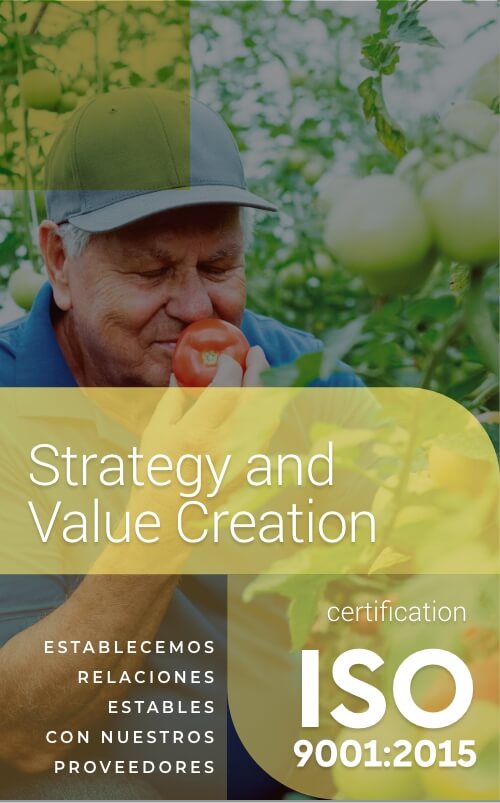
We also have ISO 9000 certification, which allows us to maintain optimal management in the organization, guaranteeing the standardization of our processes and the quality of our products. Finally, we have internal and external audits to evaluate the correct management of our suppliers. We use the results to improve our processes, which allows us to have a continuous improvement.
The main supplies of the Pork Meat Business are yellow corn, soybean paste and sorghum, used to feed the pigs. These are purchased from various domestic and international suppliers at prevailing market prices. However, we also have commercial agreements with domestic suppliers under which terms are established to guarantee the supply of grain and soybean paste mainly, with variable terms and maturities.
We also have contracts for the transportation of raw materials and live pigs, as well as storage services (freezing and preservation) with various counterparties. Other relevant contracts correspond to the lease of land where some of our stores, offices and other facilities are located. In addition, we maintain contracts with third parties, referring to the figure of rural sharecropping, a model that is part of the farm area of the production scheme.
During 2021, spending on local suppliers accounted for 22% of the total procurement budget, 7.3% lower than in 2020.
Regarding the environmental evaluation of suppliers, although, they must sign their adherence to the Code of Ethics and the ESG Charter, currently, none are evaluated and selected according to environmental or social criteria.
100%
sharecroppers
comply with animal
welfare standards
and policies.
We are currently carrying out pre-assessment work with a view to obtaining ISO 14001 certification in the future.
We have verified, through regular audits, that 100% of our sharecroppers comply with animal welfare standards and policies, and we have begun the process of obtaining certification on this issue.
Regarding the evaluation of social impacts, we identified that the transport trucks that pass-through communities in the region may generate some type of impact on noise, infrastructure, or the perception of risk due to heavy traffic. Therefore, we have held meetings to reinforce issues of good driving, and we have implemented a complaint attention number in all units. In addition, we carried out an adequate planning of routes and schedules.
The main raw materials in this business are butadiene and acrylonitrile, to produce synthetic rubber, and styrene for the production of polymers. Most of these raw materials are purchased through imports, and there is currently a sufficient supply of these substances.
During 2021, in the Synthetic Rubber business, spending on local suppliers represented 12% of the total procurement budget. Currently, we do not select new suppliers under environmental or social criteria, however, during the year we evaluated 95 suppliers where environmental and social performance was rated, no supplier with significant, potential, or actual impact was identified.
In the Polymers Business, spending on local suppliers represented 0.28% of the total procurement budget. In terms of environmental or social assessment, we did not select new suppliers under these criteria.
For our Transmissions and Aftermarket businesses, the main raw materials used are steel and aluminum.
For Transmissions, spending on local suppliers accounted for 19% of the total procurement budget. We currently do not have any environmental or social criteria in the evaluation of suppliers; however, we apply for IATF or ISO 9001 certification which involves the identification and mitigation of risks including environmental issues. Additionally, in the case of our suppliers of direct materials, they must report the materials included in the product. In the case of hazardous materials, all of them must have safety data sheets; if they do not have them, they cannot enter the plant.
In the case of Aftermarket, spending on local suppliers accounted for 28% of the total procurement budget. In terms of environmental or social evaluation, we do not select new suppliers under these criteria.
Comprehensive Enterprise Risk Management is a process carried out by the Board of Directors through the Audit Committee, General Management, Finance departments and other members. To manage risks, we have the ERM Risk Management Methodology, which aims to provide a guide that allows the identification, evaluation, and response to key risks that may impact the achievement of the Group’s strategies and objectives.
We implement this methodology through “The three lines of defense”, i.e., multiple teams, with different responsibilities that work together to create value and manage internal control.
The ERM methodology is composed of four categories of objectives (strategic, operational, reporting and compliance), as well as eight components, including:
Is comprised by our staff and establishes the basis of how personnel should perceive and deal with risks and opportunities, including philosophy, vision and mission, integrity and ethical values, responsibilities, and the environment in which we operate.
Corporate management ensures that management has established a process for setting objectives and that the selected objectives support and are aligned with the mission and are consistent with accepted risk.
Internal and external events affecting objectives should be identified and differentiated between risks and opportunities.
We analyze risks considering their probability and impact as a basis for determining how they should be managed, and they are evaluated from a triple perspective, inherent, residual, and planned residual.
Management selects possible responses - avoid, accept, reduce, or share risks - developing a series of actions to align them with accepted risk and risk tolerances.
We carry out a control process to ensure the effectiveness and efficiency of the control. Controls can be manual or automatic and operate together to ensure the completeness, accuracy, and validity of information. Policies and procedures are part of the control activities.
Relevant information is identified, captured, and communicated in a timely manner to enable employees to meet their responsibilities.
The totality of risk and opportunity management is supervised, making timely modifications when needed. This monitoring is carried out through ongoing management activities, independent evaluations, or both.
The business vision is oriented towards sustainable development and the generation of shared value. We believe that the Group’s growth must go hand in hand with the communities in which we operate; therefore, for KUO is essential to establish a relationship of dialogue and actions that generate positive impacts on the well-being of the communities, such as support for education, health promotion and job creation.
We manage our social impact through our Corporate Social Responsibility Policy, which revolves around the analysis of material issues and the generation of actions to promote the Sustainable Development Goals. We also have volunteer programs, are affiliated with industry chambers, and participate in mutual aid committees.
In addition, we work together with independent groups such as universities and NGOs that evaluate the needs of the community, generate programs based on those needs, and then carry out an assessment to determine the objectives achieved and the impact generated by the actions carried out.
We currently have social participation in the communities neighboring our operations. To evaluate our performance, we measure the number of social conflicts, the number of social initiatives developed, and the number of employees who participate in volunteering.
$68.1
Million for the implementation of protocols against Covid-19
+25.7K
People benefited by programs focused on health
$21.6
Million for Social Investment mainly destined to: