



We aim to contribute to the well-being of our personnel through healthy labor relations that allow us to maintain labor stability with the best quality of life for our employees.
We have a work system in which we define, establish, regulate, and develop all the elements that make up management, such as the workday, roles and responsibilities of our employees, competitive compensation, recognition, productivity, technical and organizational competencies, among others.
We comply with the applicable legislation for the responsible functioning of operations, based on the Federal Labor Law, which also establishes the right to collective-union organization and regulated through:
We generate a work environment that allows for maximum individual and organizational performance and provide professional and technical development programs for employees.
We also support management with the following tools:
The aforementioned allows us to impact the organization in different ways, achieving operational continuity free of labor conflicts, maintaining a positive work environment and climate, and ensuring quality customer service.
We measure management through various indicators such as: level of employee satisfaction, level of productivity, results of collective bargaining agreement revisions, number of operational stoppages, number of lawsuits, absenteeism, turnover, accident rate, training hours, among others. We also use the results to propose actions for continuous improvement in accordance with the objectives and goals of each business.

We measure management through various indicators such as: level of employee satisfaction, level of productivity, results of collective bargaining agreement revisions, number of operational stoppages, number of lawsuits, absenteeism, turnover, accident rate, training hours, among others. We also use the results to propose actions for continuous improvement in accordance with the objectives and goals of each business.
Finally, it is important to mention that management is the result of a continuous feedback process with various stakeholders, among the main agreements are:
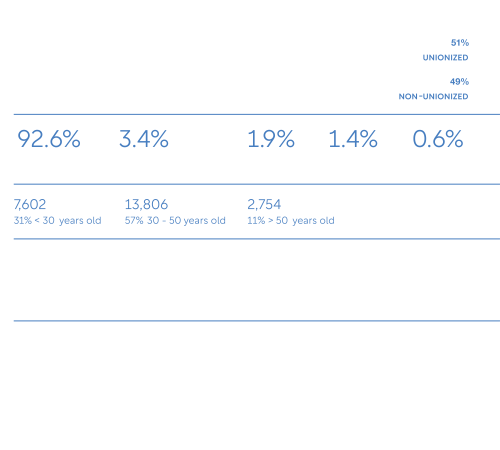
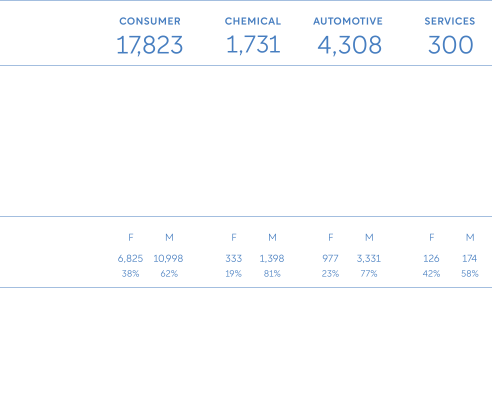
We do not have part-time or temporary employees in the Consumer or Chemical sectors. All employees have the same benefits, including health insurance, parental leave, disability coverage and life insurance, as well as additional benefits such as food vouchers, savings fund, paid leave for extraordinary occasions, among others.

The minimum period of communication of operational changes is agreed within the collective bargaining agreements, with the following particularities per business:
Pork Meat: Changes and/or new conditions of the collective bargaining agreement are reported on an annual basis, after which weekly meetings are held to discuss special or emerging situations. The notification period varies depending on the magnitude and is estimated according to the needs of the business.
Synthetic Rubber: Communication of significant changes is done in a timely manner globally when it is a modification affecting the entire business and locally when it is an issue that affects only a specific location. In any case, as long as it is a communication whose subject does not have a legally established and regulated period of time, the deadline is variable and is estimated according to the needs of the business.
Polymers: Significant operational changes are communicated two weeks in advance. The notification period varies depending on the magnitude and is estimated according to the needs of the business.
Transmissions: A General Communication Meeting is held quarterly to report significant changes or special situations, the notification period varies depending on the magnitude and is estimated according to business needs.
Aftermarket: The notification period varies depending on the magnitude and is estimated according to business needs.
Training
During the induction process, training is provided to all employees, in which the main qualities of the Company are shown, the organizational culture is discussed, and specialized training is given on the different areas of the company.
We also offer technical and specialized programs focused on safety, quality assurance, product biosafety, process standardization, among others. Finally, we offer training programs in soft skills, focused on the development of leadership, communication, and performance competencies.
The average number of training hours was:

Performance Assessment
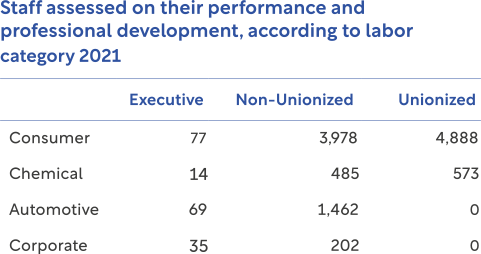
Through the SIGO platform we periodically monitor and evaluate the performance of our employees, which allows us to manage our Human Capital needs more efficiently, as well as to align the objectives of the entire workforce with the Group’s overall strategy. The total percentage of employees who have received performance evaluations by gender is as follows:

Non-discrimination
During the reporting period, there were no cases of discrimination in any of the sectors in which we operate or in their respective lines of business.
Safety is managed as a priority issue in the strategy. As a matter of high importance, it is led by the Chairman of the Board, and has an impact on stakeholders, from employees, contractors and anyone who enters any of the Group’s facilities.
The Sustainability and Communication Department, which reports to the Deputy General Management, is responsible for designing, building, and disseminating the Occupational Health and Safety (OHS) Management System, which consists of guidelines containing KUO’s best safety practices, both national and international. All employees and persons entering any of the facilities are responsible for observing and enforcing the policies and the Safety System.
Our goal is ZERO casualties, as well as the mitigation of any possible situation that puts any person at risk.
There is an Occupational Health and Safety Policy, which applies to all Group companies, this includes all Businesses, the Service and Control Units and the Shared Services Unit. The objective of this policy is to establish the guidelines and behaviors to be followed in the area of OHS, in order to protect the physical integrity of our employees, prevent injuries and damage to their health. It also seeks to avoid affecting the safety of the processes, through the implementation and execution of the guidelines of the Occupational Health and Safety Management System (SGSSO), which includes the identification of hazards, risk assessment and establishment of measures for prevention, correction, control and/or transfer.
The following documents are part of the Occupational Health and Safety Policy:
It is important to note that, in addition to the Occupational Health and Safety Policy, we have protocols in response to the Covid-19 pandemic, as well as medical committees, which meet every week, in response to the health emergency and occupational health and disease issues.
We also have a Critical Risks Matrix, which is explained through a graphic scheme in which the level of risk (chemical, physical, biological, and psychosocial) of the processes or equipment is ranked according to their probability and impact on the health of workers, surrounding communities and business assets.
Another management element is the Central Occupational Health and Safety Committee, which leads and directs the development, implementation, execution, and improvement of the OHS. We also have Occupational Safety and Health subcommittees, which are responsible for developing and implementing best practices in OHS in all areas and each of the facilities operated by the Group’s companies.
The leaders of each area must implement the measures established to comply with the Occupational Health and Safety Policy and the respective guidelines and participate actively in the corresponding local committees and subcommittees. They must also ensure that their personnel are trained and promote safe behavior, as well as the correct management of risks in their area.
The main actions related to good health and safety management in the Group are as follows:
1. We create a culture of self-care, making it a working condition and a sense of belonging in employees and their families.
2. We promote healthy and safe work environments, which also prevents absenteeism, turnover, training of substitutes, among others.
3. We identify and control health risks, since, in addition to directly affecting employees, they represent high costs in incapacity due to illnesses or work accidents, as well as an increase in risk premiums for the IMSS.
4. We constantly monitor and control vulnerable personnel.
5. We strictly comply with the regulations and norms to which the organization is obliged, avoiding fines, closures, and summons.
6. We take care of the environment and the community near the company.
We get feedback on the OHSMS through stakeholder engagement and communication, which takes place through different means:
In addition, we have an Occupational Health function holder at each location, who must ensure, to the extent possible, that the workplace remains free of occupational diseases through compliance with the medical surveillance program for Occupationally Exposed Personnel (OPE) and the supply chain. In addition, we are responsible for identifying hazards in the work environment and informing workers of the risks to which they may be exposed and their impact on their health.
We also maintain active channels in internal (medical sessions) and external forums with Occupational Health and Safety areas, in which best practices, knowledge and experiences are shared to improve standards in the safe performance of activities.
In the event of a critical situation caused by repeated accidents, occupational illnesses or legal non-compliance that could result in sanctions or interruption of operations, a Contingency Plan will be implemented to halt this trend and correct deviations in the short term.
If a severe traumatic event occurs, it is reported to the Occupational Health Manager or the Safety and Hygiene Manager directly, through the occupational health and safety preventive services or the safety and hygiene commission.
The OHSMS is evaluated through Frank Bird’s Pyramid, in which the areas of opportunity in each business are identified and then improved or corrected, always with the objective of minimizing risk in each of the operations. We also carry out audits of all the group’s medical services. It should be noted that we have achieved 80% compliance with the regulations applicable to the Occupational Health area of our operations.
According to the pandemic management, in addition to the constitution of the Covid-19 Committee, we apply specialized protocols through which we seek to minimize Covid-19 cases. All this work is also carried out to ensure good health care services and facilitate workers’ access to them.
In addition to the implementation of protocols, we provide remote counseling, PCR tests, antigen and antibody tests and rapid tests to all personnel. We provided loans of biometric equipment such as thermometers, handheld infrared, pulse oximeters and even oxygen concentrators, for the time required by our employees or their families. We also provide loans of wheelchairs, crutches, and neck braces.
We also offer benefits for all employees and their immediate families with clinical laboratories, dental, optometric, and Gym-Pass services, as well as emotional support through the DESContigo psychology service (via telephone 24/7) and/or the in-house psychologist.
Occupational health and safety at the facilities is managed through the Safety Management System, based on the Deming or PHVA cycle, which aims to identify, evaluate, and control the risks of operations, to ensure the integrity of our personnel, facilities, environment, and neighboring communities.
Although we use KUO’s Occupational Health and Safety Policy as a frame of reference, each year we define objectives that allow us to improve the safety culture and its respective indicators. Along these lines, we have prepared a management manual dedicated exclusively to the Occupational Health and Safety Management System.
This system was designed in accordance with the occupational health and safety management requirements of the international standard ISO 45001:2018. The system operates with an approach based on the PHVA improvement cycle, taking as its main element the management of occupational safety and health hazards and risks. It also considers compliance with legal and other applicable requirements.
The OHSMS covers all activities and is applicable to all personnel, including suppliers, contractors, and visitors, to achieve a safe working environment free of occupational diseases.
We have procedures in place to preserve the health and safety of our employees, including Risk and Opportunity Management, together with the Risk and Opportunity Matrix, in which the needs and expectations of stakeholders are recorded.
Documented operational controls to control OHS hazards and risks include the following documents:

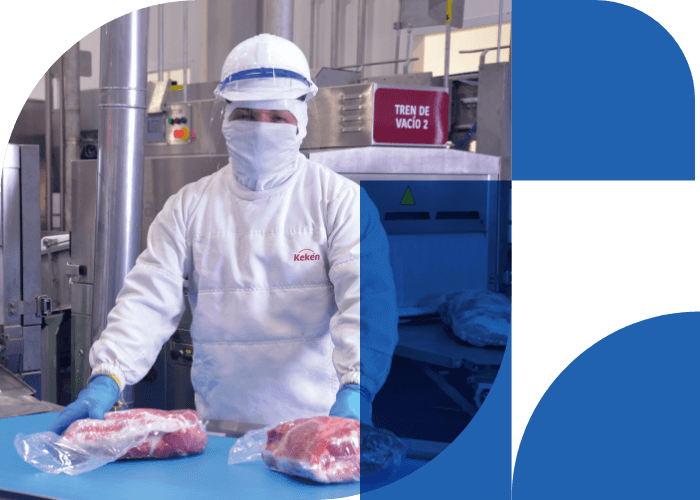
Employee participation and consultation is the basis of the Safety Management System. The activities in which the personnel participate are defined in the Administrative Participation standard, which establishes the preventive safety activities to be carried out by the collaborators depending on their job position.
On the other hand, we have the Internal and External Communication Plan, which describes the guidelines to ensure the establishment of appropriate means of communication between the different levels and functions. This plan is designed to ensure the effectiveness of the OHSMS, as well as to receive, document and respond to communication from customers, suppliers, contractors and interested parties.
Additionally, there is a corporate procedure “Safety Communications” that establishes the requirements for effective safety communications, through personal contacts, safety meetings and safety rallies, which allow the implementation of a safety culture aimed at maintaining the integrity of the personnel working at Procesadoras Kekén.
Finally, through our monthly newsletter we communicate to our employees the operation and progress of the safety management system, which includes accident rate indicators, analysis by type of accident, results for the month, among other relevant information for the entire company.
In the case of processors and in accordance with the ISO45001 standard, we have a training needs detection and an Annual Training Program, which establishes the minimum courses that personnel must take depending on their job position and the annual program to comply with the defined competencies. Among the safety courses provided are the following:
We have a procedure for reporting and investigating incidents and accidents, which must be reported in their entirety, immediately, to the direct supervisor of the injured employee, no matter how slight the injury may be.
It also establishes the steps to follow for accident investigation and the need to define permanent actions to combat the basic causes of the events and thus avoid recurrence.
We also work with a software, called ISA-software, in which all accidents, investigations and action plans are registered, which allows us to follow up in real time the status and actions until their closure.
We act in accordance with the following pillars:
Prevention
Surveillance
Assistance
We evaluate the exposure to a risk, from the biological control proposing preventive measures. We plan the provision of first aid in the workplace. We inform and train on occupational health risks and the necessary preventive measures. We evaluate the effectiveness of the preventive measures implemented to eliminate and reduce exposure based on health indicators.
We act in accordance with the following pillars:
Prevention
We evaluate the exposure to a risk, from the biological control proposing preventive measures. We plan the provision of first aid in the workplace. We inform and train on occupational health risks and the necessary preventive measures. We evaluate the effectiveness of the preventive measures implemented to eliminate and reduce exposure based on health indicators.
Surveillance
We design health surveillance activities appropriate to each situation. We identify and diagnose work-related health problems. We carry out health examinations. We select and manage health indicators. We analyze and assess workers’ health problems and their interaction with work (work capacity).
Assistance
We provide the necessary medical attention in case of emergencies and urgencies. We elaborate and promote recommendations on rehabilitation and return to work. We carry out the diagnosis, treatment and follow-up of occupational diseases, work-related diseases, and common diseases, as appropriate.
In addition to the aforementioned, each year the person in charge of the Medical Service, in coordination with the person in charge of Safety, prepares and implements occupational safety programs in accordance with the Master Plan for Occupational Health, considering the following for its preparation:
It also performs the following activities:
With respect to particularly sensitive workers (pregnant or breastfeeding women, disabled workers), it communicates such circumstances to the Human Capital Management, Operations Management and Safety Manager for their knowledge and corresponding legal considerations.
+23K
Medical
attentions
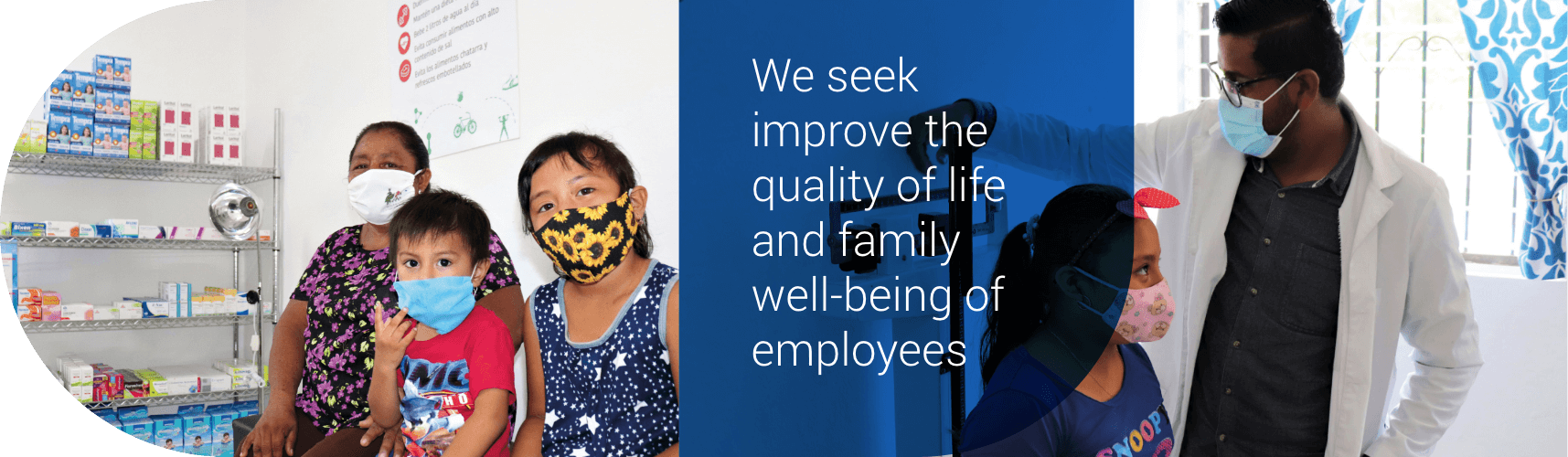
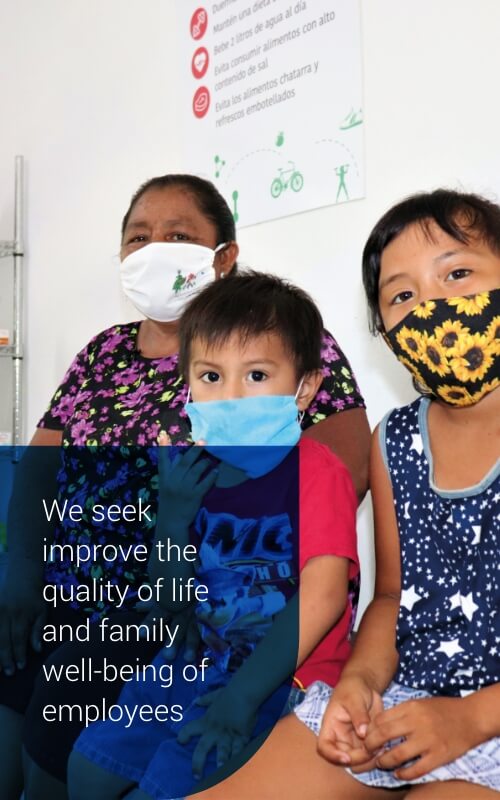
We expand our projects to improve the quality of life and family well-being of our employees. We have the following programs:
In addition, the aforementioned health centers also offer preventive medicine, with the support of a health volunteer from each population, among other activities.
By the end of 2021, we reported more than 23,880 medical attentions, which helped us to know the needs of the communities in which our employees live and thus create an action plan together with the Secretary of Health of the State of Yucatan.
In addition to following the Group’s OHSMS, we have Safety, Health and Environment and Sustainability Policies. We evaluate the effectiveness of management with indicators of accident rates and compliance with safety programs, such as ISO 45001 Management System audits, internal audits, audits of reinsurers and statutory audits.
In terms of employee participation and consultation processes, for the development, implementation, and evaluation of the OHSMS we have the Dynamízate program, which aims to modify factors that cause stress by generating a support platform and information tools that help in the workplace with the creation of a balance between work duties and personal activities that can help generate an improvement in the quality of life of the collaborator.
Training
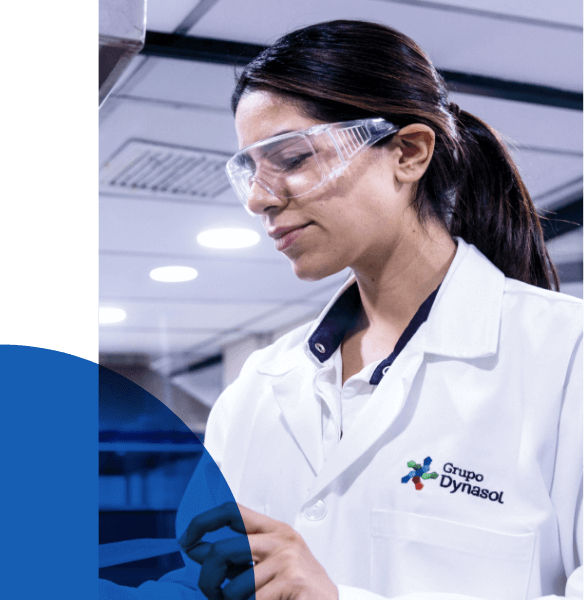
We have training courses for workers that include:
Accidents
We classify accidents as follows:
On the other hand, we would like to point out that there were no deaths due to occupational accidents or occupational diseases for employees and external workers in the year of this report. We report daily, from each plant, the incidents and accidents that have occurred, in addition to indicating that there have not been any if this is the case.
We have a procedure for the management of incidents and accidents, which indicates the complete management, including risk assessment and investigation, if applicable. We also have a computer tool for the communication and management of incidents and accidents.
The health surveillance of contracted personnel is the responsibility of their corresponding companies. However, in all industrial centers we carry out coordination activities with contractors, including training and information on existing risks, and we also explain safety standards and respiratory protection, if necessary. In addition, we manage the corresponding work permits where preventive measures are indicated to reduce risks, including the breathing of possible contaminants if necessary.
-50%
incapacitating
accidents
vs 2020 in the
CHEMICAL sector
Medical Services and Healthcare
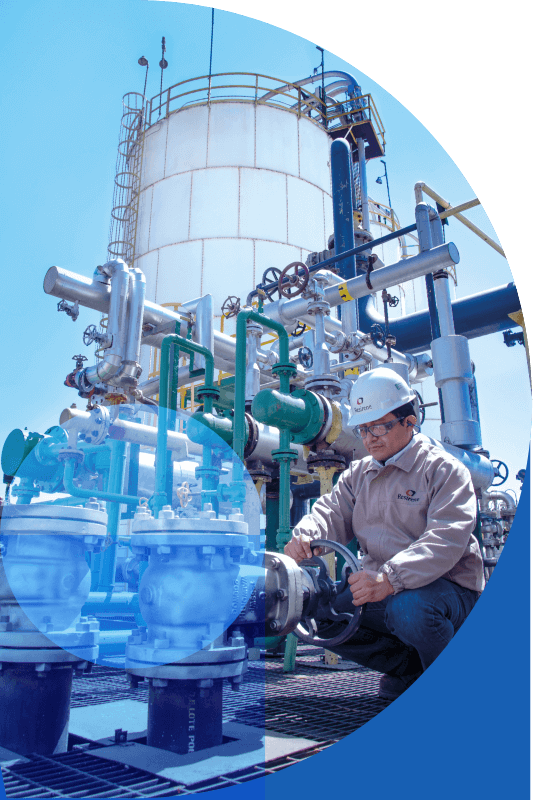
Our health services that contribute to the identification and elimination of hazards and the minimization of risks at work include the following:
Employees have access to medical services whenever they request internal consultation care, whether for common pathologies or chronic degenerative or infectious diseases.
In addition, we have specific programs to address non-work-related problems, such as the Healthy Heart Program, which involves comprehensive care with virtual, nutritional, and medical counseling in order to have quick and timely diagnosis and treatment. We also provide continuous follow-up on overweight issues and flexible schedules. On the other hand, the Be-Healthy Program, based on health promotion and prevention, integrates healthy eating, physical well-being, and mental well-being.
In the face of endemic processes, promotion and prevention campaigns are launched, and the organization allocates resources so that the workforce can maintain the operation without any impact. We attend to health requirements, evaluate the need for specific studies, provide medical care for each plant with punctual follow-up by the medical service and, in the event that specialized consultations are required, we provide support until complete recovery and reincorporation to work. We guarantee that the workforce maintains a level of flexibility, so as not to affect the operation and have a prompt return to work in a timely manner, avoiding premature discharges and complications.
We use the Group’s OHSMS to manage the health and safety of our employees, contractors, and visitors at all operations.
During the reporting period, there were no fatalities due to occupational accidents or occupational diseases among employees and external workers.
In the Automotive sector, regarding the Aftermarket and Transmissions businesses, we use the Group’s policy; however, we have specific activities specific to the sector to protect and promote the highest degree of physical, mental, and social well-being for the health of each employee, among which are the following:
Additionally, in order to identify hazards and minimize risks, we conducted a risk mapping by work area, locating critical points, in accordance with the Mapping and Communication of Agents and Health Risk Factors policy, accompanied by a procedure for medical care and accident investigation.
In 2018, a risk mapping committee was created, which is made up of a multidisciplinary team, whose objective is to identify, evaluate and carry out a control plan for those agents and relevant risk factors, whether physical, chemical, biological, ergonomic, mechanical, and psychosocial. Committee meetings are scheduled on a weekly basis, giving priority to areas and operations considered critical.
We also have the following accident prevention activities:

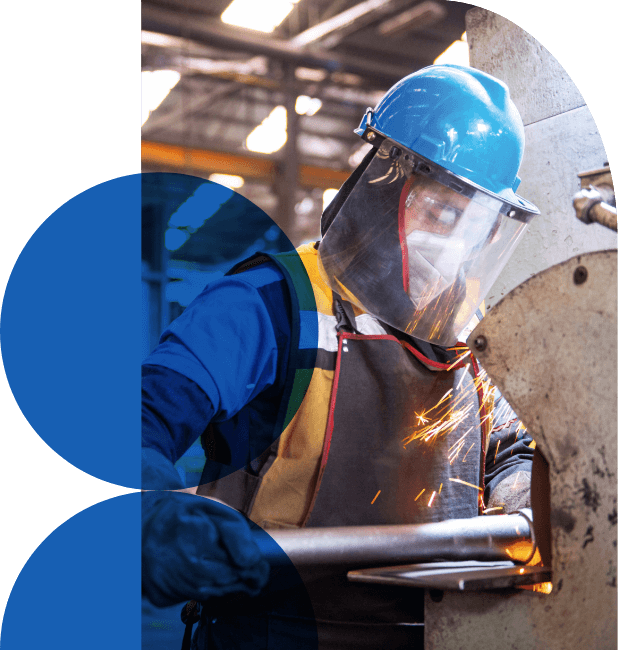
In addition to keeping all our employees informed through different media of the programs and campaigns we offer, we have specific training for different brigades, such as the fire department, emergency brigade and evacuation brigade.
We carry out behavioral observations and Cash inductions, which consist of informing about safety issues. In addition, we provide specific training on working at heights, working in confined spaces, forklift operation, welding, general induction, and job induction.
Workers participate in reporting unsafe conditions and acts. In addition, safety-related events are disseminated physically and digitally (through safety inductions, personnel certifications, talks, brochures, posters, presentations, and signage).
In the induction, the functions, scope, and obligations/rights that they have as employees of the company are explained, which includes participating in health campaigns, performing examinations and studies requested, general and emergency medical care.
Employees must also report changes in their health or clinical conditions that they consider important. Employees must report directly to the Medical Service through Safety and/or Human Capital, any unsafe conditions, or changes in their state of health that are related to their work activity, after which the case is investigated, and “Medical Service Alerts” are issued. These alerts are disseminated to the stakeholders involved, so that they are aware of the case and the corresponding “action plan” is developed.
Monthly theoretical-practical health talks are given on the floor (depending on the topic) on occupational health risks: noise, extreme temperatures, vibrations, ergonomics, psychosocial risks, skin, and respiratory tract damage due to exposure to chemicals, prevention of metabolic diseases, etc.
We participated in the training of First Aid brigade members and for all plant personnel on CPR and the use of AED (automatic external defibrillator).