GESTIÓN Y
MO
NITO
REO
DE RIESGOS
At KUO we have a risk management process that involves different members of the organization and is applied throughout the company to identify possible events that may affect operations.
3
líneas de defensa en el sistema de monitoreo y gestión de riesgos
Risk
Management
and Monitoring
At KUO we apply policies and procedures for the identification, monitoring and management of risks that may affect the achievement of strategic and business goals, including financial, operational, reputational, cybersecurity, environmental and other risks.

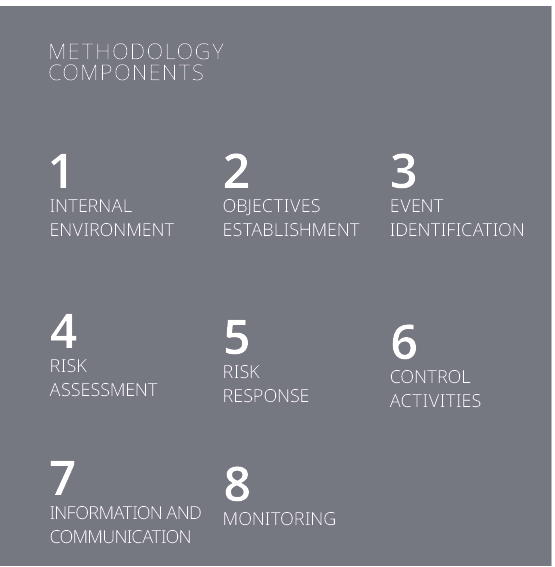
We have a risk management process that involves different members of the organization and is applied throughout the company to identify possible events that may affect operations. This process is based on the COSO methodology and provides guidelines for the management and control of business risks.

The Audit Committee oversees its application, while General Management and Finance Management are responsible for implementing a robust internal control system. The Internal Audit Department evaluates the effectiveness of the system and makes improvements in controls to reduce risks, reporting to the Committee and the General Management.

The methodology implemented was carried out by means of "The three lines of defense", which means multiple teams with different tasks and responsibilities that work together with the objective of generating value and managing internal control:
FIRST LINE
Comprised by the six businesses, the shared services units and the service and control units, which are responsible for enforcing KUO's general internal control guidelines.
SECOND LINE
Comprised by the General Management, responsible for proposing business and risk management strategies. The Deputy CEO, the CFO and the Comptroller's Office are responsible for supporting management in identifying trend lines, preparing scales of critical and emerging issues, classifying, analyzing, and reporting on internal control and providing regulatory frameworks.
THIRD LINE
Comprised by the Board of Directors, which works in conjunction with the Audit Committee, which has the duty to supervise, evaluate and provide feedback to the compliance area and supervise the main risks.
Sustainable
Supply Chain
Ensuring a constant flow of goods and services is crucial to the proper functioning of production and support processes
We strive to establish equitable, honest, and beneficial relationships with all our suppliers, which allows us to maintain operational continuity.

In order to carry out a correct management, each business has a responsible area, in addition to having a Purchasing Policy, transparent and auditable processes, supported by a central supplier platform. Additionally, all suppliers must accept and sign the Code of Conduct, through which they assume the commitment to maintain an ethical behavior, complying with the standards and premises included in it.

We select suppliers that operate with good ethical, environmental, and labor practices. They must have a solid reputation and the capacity to provide the required services or produce the required goods. Additionally, all our national suppliers must adhere to the signing of an ESG charter, where they commit to:

- Work and operate in accordance with legislation and regulations.
- Ensure the health of its partners.
- Comply with and ensure respect for human rights, prohibiting child or forced labor, and no tolerance of discrimination.
- Comply with environmental regulations.
- Work and operate with zero corruption, bribery, or extortion.

Therefore, we do not purchase products or contract services with suppliers that have a negative track record within KUO companies, as well as those suppliers of goods and services that do not present the letter of adherence to the Code of Conduct and the ESG Compliance Letter duly signed.

During the period we have not identified suppliers with negative environmental or social impacts.
We keep long-term relationships with our suppliers
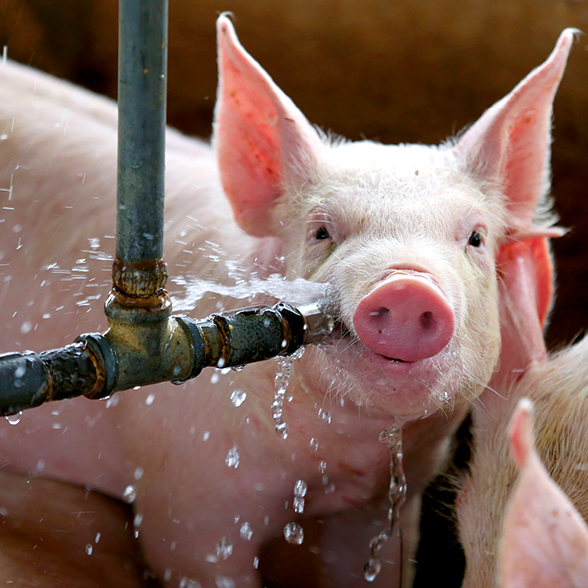
The business is vertically integrated, from genetics, through breeding and feeding, to processing and marketing1. Our artificial insemination processes and animal breeding farms ensure the quality and welfare of our animals. The facilities have been certified by Cloverleaf Animal Welfare for compliance with animal welfare standards.

All of the animal feed used to nurture the pigs comes from our three feed facilities located in Yucatán, which is not considered a water stress area.

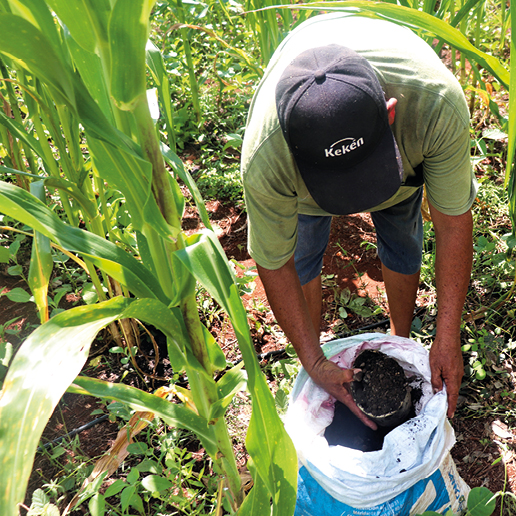
The main inputs we use for the production of balanced feed are yellow corn, soy paste, and sorghum. To guarantee their supply, we purchase products from suppliers with whom we have long-term relationships.

With respect to service providers, we have contracts for the transportation of raw materials and live pigs.

During 2022, the spending on local suppliers was 19% of total procurement spend.

Going forward, we have set ourselves the goal of identifying suppliers certified in sustainable sourcing standards and conducting audits on environmental or social issues throughout our supply chain.
1. A description of the value chain of each of our business units can be reviewed in the following link: https://kuo.com.mx/informe-anual/2021/es/sobre-kuo
The main raw materials in this business are butadiene and acrylonitrile, with which we produce synthetic rubber in emulsion, synthetic rubber in solution and chemicals for the asphalt modifier industry, tires, industrial compounds, pesticides, among others.

Most of these inputs are imported, so we establish both long-term and spot contractual relationships with our monomer, chemical and packaging suppliers.

By 2022, we have identified 270 relevant suppliers, those who are essential to maintaining our supply chain and ensuring uninterrupted production.

Spending on local suppliers accounted for 22% of total procurement spending.
In the production of polymers, one of the most widely used inputs is styrene, which is essential for the manufacture of various products such as glass polystyrene (GPPS), high impact polystyrene (HIPS), transparent styrene copolymers (SMMA) and plastic compounds for the packaging, lighting, and home accessories industries, among others.

However, most of the inputs needed for this industry are imported. In our case, we have established commercial relationships with different suppliers located in countries such as the United States, China, Guatemala, and European countries, who supply us with the raw materials and the logistics and storage services necessary to carry out our activity.

During 2022, we have worked with more than 500 suppliers to ensure the quality and timely supply of our inputs.

Spending on local suppliers represented 2% of our entire procurement budget.
For the production of high-performance transmissions and components, we mainly use steel and aluminum. The relationship with our suppliers is critical, due to the supply of the Company's inputs and services, their lack of supply could impact our ability to produce and sell.

Spending on local suppliers represented 20% of total procurement spending.
The main raw materials are steel and aluminum, with which we produce pistons, bearings, brakes, among other products, as well as packaging materials, such as cardboard.

We have suppliers from China, Mexico, and Taiwan, who provide us with two types of services: goods supply and national and international transportation, maintenance, training, among others.

Spending on local suppliers represented 54% of total procurement spending.
Social Management
+$26 million pesos invested in
social issues
At KUO, it is essential that all operations are carried out in an environment of harmony with the communities, demonstrating our commitment to the creation of shared value, with actions that contribute to the group's sustainability objectives.

We have a Social Responsibility Policy that is aligned with the Code of Conduct, which allows us to ensure compliance with corporate values in all our activities. In addition, we develop community relations programs based on the results of a social diagnosis, which allows us to know the socioeconomic characteristics and possible socio-environmental impacts that may affect each community.

We maintain constant communication with municipal and local authorities. As a responsible company, we comply with current legislation in all countries where we operate, and respect internationally recognized human rights.

In 2022, we will develop programs and initiatives linked to the promotion of employment and local productive development, foster access to health and education, care for the environment, and promoting sports. We generate alliances with the educational, business, government and civil society sectors. We have not identified negative impacts.

We also promote a culture of social responsibility through social participation programs and corporate volunteering, in which we work together with civil society organizations and in which our employees have the opportunity to participate freely in order to share our values.
  • Second Tremec Environmental Week: Awareness campaign on environmental preservation and its impact on society.
  • ESR Recertification.
  • Installation of waste container: Promoting the circular economy of plastic.
  • Aftermarket Recyclathon: Recycling of more than 500 kg of plastic, caps, and other waste.
  • Summer camp for employees' children.
  • Training internships for university students in our facilities.
  • Young Talent Program: Training program for recent graduates.
  • TREMEC Health Week: Activities on disease detection, active breaks, psychology, nutrition, and physiotherapy.
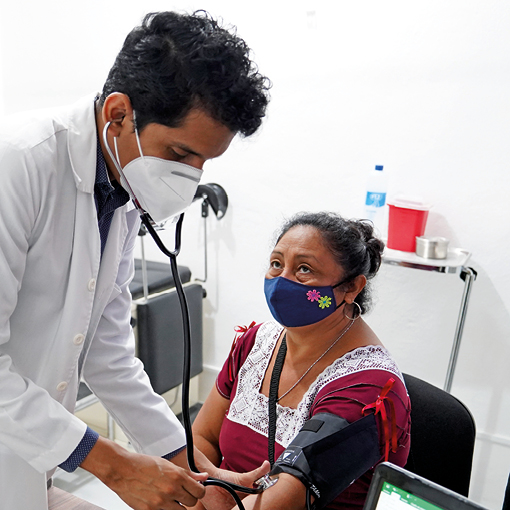
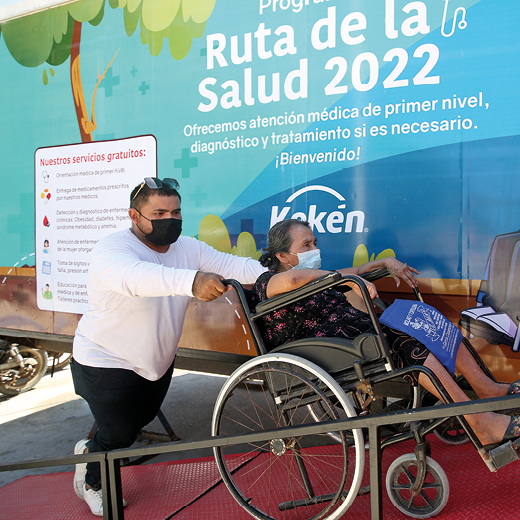
  • Ruta de la Salud (Health Route): Itinerant care provided by nurses and doctors.
  • Save The Children - For a Healthy Community: Partnership to address health and human rights needs.
  • Opening of three new health care centers in areas lacking health services.
  • Acquisition of oxygen concentrators for senior citizens' retirement homes.
  • Donation of chairs and  computers to public education institutes.
  • Donation of wheelchairs.
  • Donation to Civil Protection.
  • Donation of pipes for field lighting.
  • Sports coaches for children and teenagers.
  • Sports equipment: for children's baseball, soccer, basketball, boxing, and softball.
  • Donation of sports uniforms for youth soccer, women's softball, and Zumba teams.
Zero incidents of non-compliance with the rights of indigenous communities
Land Use and Resource Rights - Pork Meat
We have implemented commitments to promote respect for land and natural resource rights. We do not have operations in locations where land and natural resource rights may be affected.
Indigenous Communities - Pork Meat
Our strategy with indigenous communities is based on a cross-cutting approach, addressing economic, social, and cultural aspects. We are committed to working in partnership with indigenous communities and relevant authorities to ensure respect for and promotion of their rights and sustainable development. The specific outreach activities we carried out during the year were as follows:
  • Contacting Mayan-speaking Kekén personnel to establish relationships within Mayan-speaking indigenous communities.
  • Developing cultural activities focused on Mayan events and concepts of the region.
  • Providing technical training based on local practices.
During 2022 there were no incidents of non-compliance regarding the rights of indigenous communities.