PROCESOS Y
PRO
DUC
TOS
SOSTENIBLES
WE OFFER INNOVATIVE PRODUCTS AND SOLUTIONS WITH HIGH QUALITY STANDARDS
Product and
Service Innovation
At KUO we strive to offer customers innovative products and solutions with high quality standards. We know that the world evolves rapidly, so we constantly develop updates to the products and services we have in our portfolio.
In this way, we ensure that we meet consumers' needs and preferences. In addition, in our commitment to innovation, we employ technological and digital advances to create products that are efficient and sustainable.

We work hard to ensure that the products we offer are manufactured following the best environmental practices, reducing greenhouse gas emissions, implementing energy saving systems and promoting the circular economy.

We implement processes so that innovation is embedded in our DNA. We train our employees and develop research and development centers where product improvements are developed in all our businesses.
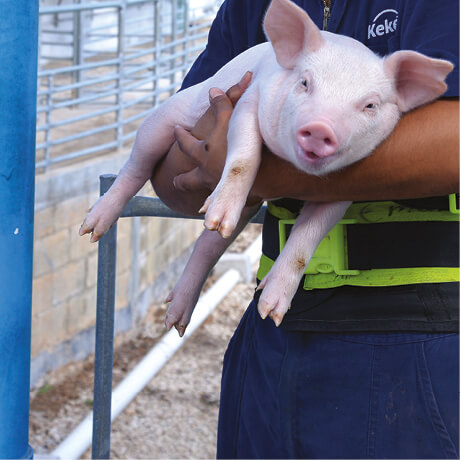
In the Consumer sector, we improved our product offering to increase our competitiveness in the market. To this end, we implemented optimizations to existing products and created new cuts of meat to meet the needs of our customers. In addition, we have worked to improve process efficiency and minimize the environmental impact of our operations. In marketing, we have developed tools such as an application to identify and segment customers, as well as home delivery services and alliances with grocery stores to increase our presence at points of sale.
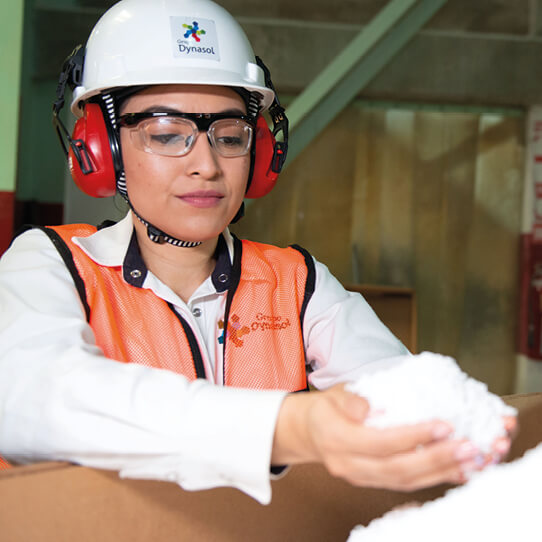
The Chemical sector has experienced a high dynamism in its business, thanks to the growing volume of applications that have focused on added value and sustainable solutions, which has translated into better results. We focus on improving product properties such as quality, strength, durability, and performance. In addition, we strive to develop new products with sustainable characteristics that contribute to the circular economy by optimizing our processes through highly specialized techniques and process simulation tools.

We are also constantly developing new technological platforms to generate new products and applications with differentiated performance.
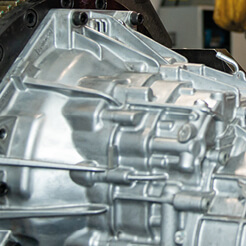
The Automotive sector has witnessed a growing demand for transmissions and components, as well as parts for brakes, engines, and powertrains. To meet customer needs, new approaches have been developed, including product optimization and diversification, the development of all-electric variants, and the development of new technologies. In addition, businesses in the Automotive sector have adopted practices to minimize environmental impact, such as waste reduction or reuse and cost optimization in formulations. Efforts have also been made to install new production lines and replace machinery to increase capacity and reduce unsafe conditions.
Product Control, Quality and Safety
Today's consumers have higher expectations and are looking for higher quality and safer products. At KUO, we are aware of this demand and therefore, we carry out a rigorous quality control process at every stage of the production chain. Thanks to this process, we can generate improved and safer products, while reducing production costs and increasing the efficiency of the value chain. All of this translates into greater consumer confidence in our brands, maintaining high demand, as consumers feel secure in acquiring quality and prestige products.

In 2022, 100% of our portfolio of products and services have been subject to evaluation in health and safety impacts, in order to promote improvements in each sector. We have not identified any non-compliance related to product quality or safety.
100% products evaluated for health and safety impacts
Consumer
For the Consumer sector, quality assurance and the safety of the final products that go to market are a priority throughout the entire production chain. We comply with all national and international regulations throughout the process, from primary production to processing and final distribution.

At KUO we have a Quality and Safety Policy which embodies our commitment to produce pork products with high standards, ensuring the safety and health of our consumers.
Breeding Farms
Animal Welfare
Use of Antibiotics
Processing Facilities
Balanced Feed Facilities
Chemical
We ensure the quality and safety of our products by complying with the legislation of the different markets where we operate and trade and with the requirements of the customers who purchase our products.
We manage quality through our Quality, Safety and Environmental Policy, which establishes our commitment to continuous improvement, respect for the environment and occupational safety. In addition, we have Good Manufacturing Practices procedures, which ensure the consistency and quality of our products.

To verify compliance with our Quality, Safety and Environmental Policy, we conduct periodic internal and external audits to evaluate the effectiveness of our procedures and identify opportunities for improvement.

We guarantee our management through the certifications we have in our facilities and brands, in that line we are validated by the Food and Drug Administration (FDA), Regulation (EU) 10/20112 , RoHS Directive 2011/65/EU3 , Prop. 65 y and finally, we have the REACH4 regulation 10 . These certifications, in addition to guaranteeing quality, set the guidelines and establish restrictions for the treatment of hazardous substances.

All products with a category 1 or 2 classification according to the Globally Harmonized System of Classification (GHS), are risk assessed for containing hazardous chemicals to health and the environment.

Sustainable Products
In 2022, we launched new high-vinyl SBS grades for asphalts, which increase their profit life and reduce the need for maintenance. In addition, we contributed to the circular economy with rubbers for mechanical recycling of plastics.
2. Regulation (EU) 10/2011 is a European Union (EU) regulation that sets requirements for materials and articles intended to come into contact with food. It was adopted in 2011 and has been applicable since May 1st, 2011.
3. It establishes restrictions on the use of six hazardous substances in manufacturing, including lead, mercury, cadmium, hexavalent chromium, polybrominated biphenyls (PBBs) and polybrominated diphenyl ethers (PBDEs).
4. We have REACH for the European Union, the United Kingdom, Korea, and Turkey. This regulation refers to the management of chemical substances and establishes a system for the identification, evaluation, and control of the risks of chemical substances manufactured or imported into the European Union.
Quality management is essential due to the presence in different markets, such as food packaging, electronics, medical and pharmaceutical products, which require high standards of quality, consumer safety and performance.

Quality management is carried out through the implementation and maintenance of standardized procedures and methodologies that ensure regulatory compliance. In addition, we conduct internal audits that enable us to verify the effectiveness of our quality, safety, hygiene, and environmental management. In this way, we can identify opportunities and implement actions to contribute to the continuous improvement of our processes. We also consider the recommendations of customers and regulatory bodies that certify us, in order to ensure that our products meet the required standards.

By the end of 2022, the Tlaxcala facility was certified under the Comprehensive Responsibility Management System of the National Association of the Chemical Industry (Asociación Nacional de la Industria Química). In addition, our products have ISO 9001:2015, USP5 , UL6 and RoHS Directive certification, which establishes the restriction of hazardous substances.
5. USP stands for United States Pharmacopeia. USP publishes a series of compendia that contain information on the quality and purity standards for pharmaceutical products, as well as the procedures and testing techniques necessary to ensure compliance.
6. UL stands for Underwriters Laboratories, an independent safety certification and compliance testing organization based in the United States.
Automotive
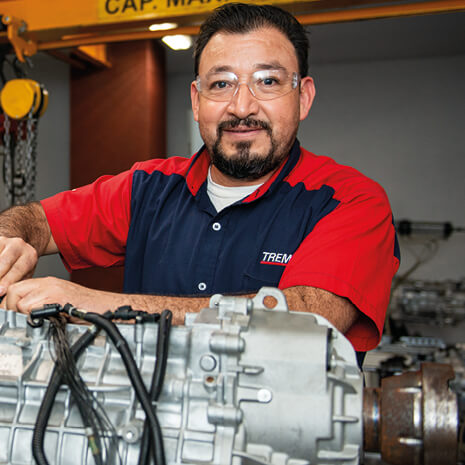
In the Transmissions business, the effective management of product quality and safety allows us to have more efficient processes and reduce costs. Therefore, we have implemented a quality management system that allows us to guarantee the excellence of our products, thus maintaining the satisfaction and loyalty of our customers.

We manage quality through an Integral Policy, a Management Manual, procedures and work instructions, continuous improvement plans and updates at different levels of the organization. These elements allow us to have control of the production process, from design to delivery of the final product, ensuring that each stage complies with the established quality standards.

In addition, to guarantee the efficiency of our processes, we have IATF 16949:2016 and ISO 14001:2015 certifications. These certifications are internationally recognized and demonstrate our commitment to quality and the environment.

Our focus on quality and product safety has been reflected in the recognition we have received from customers. For two consecutive years, we have been honored by GM with the "Supplier Quality Excellence Award" and have earned "Silver Supplier Status" recognition.

In 2022, no product had to be recalled.

Materials Efficiency
In compliance with international standards and customer requirements, more than 95% of the parts that make up a transmission system are recyclable, and are composed primarily of steel, aluminum, and lubricants. Generally, recycled and/or remanufactured materials are not used as input due to the nature of our product and the stringent requirements set by our customers.

With respect to products designed to reduce fuel consumption and carbon footprint, we can say that we supply to automotive manufacturers, therefore, it is our customers who comply with regulations such as those of the NHSA (National Highway Traffic Safety Administration) and CAFE (Corporate Average Fuel Economy) in the United States.
In turn, customers set their requirements for us to meet these standards, which we translate into efficiency values. All products meet these requirements, which contributes to improved fuel efficiency.
In the Aftermarket business, we understand that the image that customers and end users have about the quality of our brands is considered a competitive advantage, for this reason, we manage quality through an ISO 9001:2015 Quality Management System and product certifications according to the specific requirements of the markets in which we have presence. In addition, we have an ISO 17025:2017 accredited laboratory, which demonstrates our commitment to quality and excellence in our products.

We also implement continuous improvement methodologies such as Lean Manufacturing and Six Sigma7, which allows us to identify improvement opportunities in our processes and reduce costs. We conduct system, product, and regulatory compliance audits to evaluate management implementation and ensure compliance with established standards. In addition, we conduct layered internal audits (LPAs) on key processes to ensure consistency and efficiency in our operations. We use the results of these assessments to implement corrective actions and prevent future recurrences.

We are committed to continuous improvement in all our operations and processes. We constantly strive to maintain product and service quality and to exceed customer expectations.

In 2022, no product had to be recalled.
7. Six Sigma is a quality improvement process that focuses on reducing process variability and increasing
the quality of products and services.