

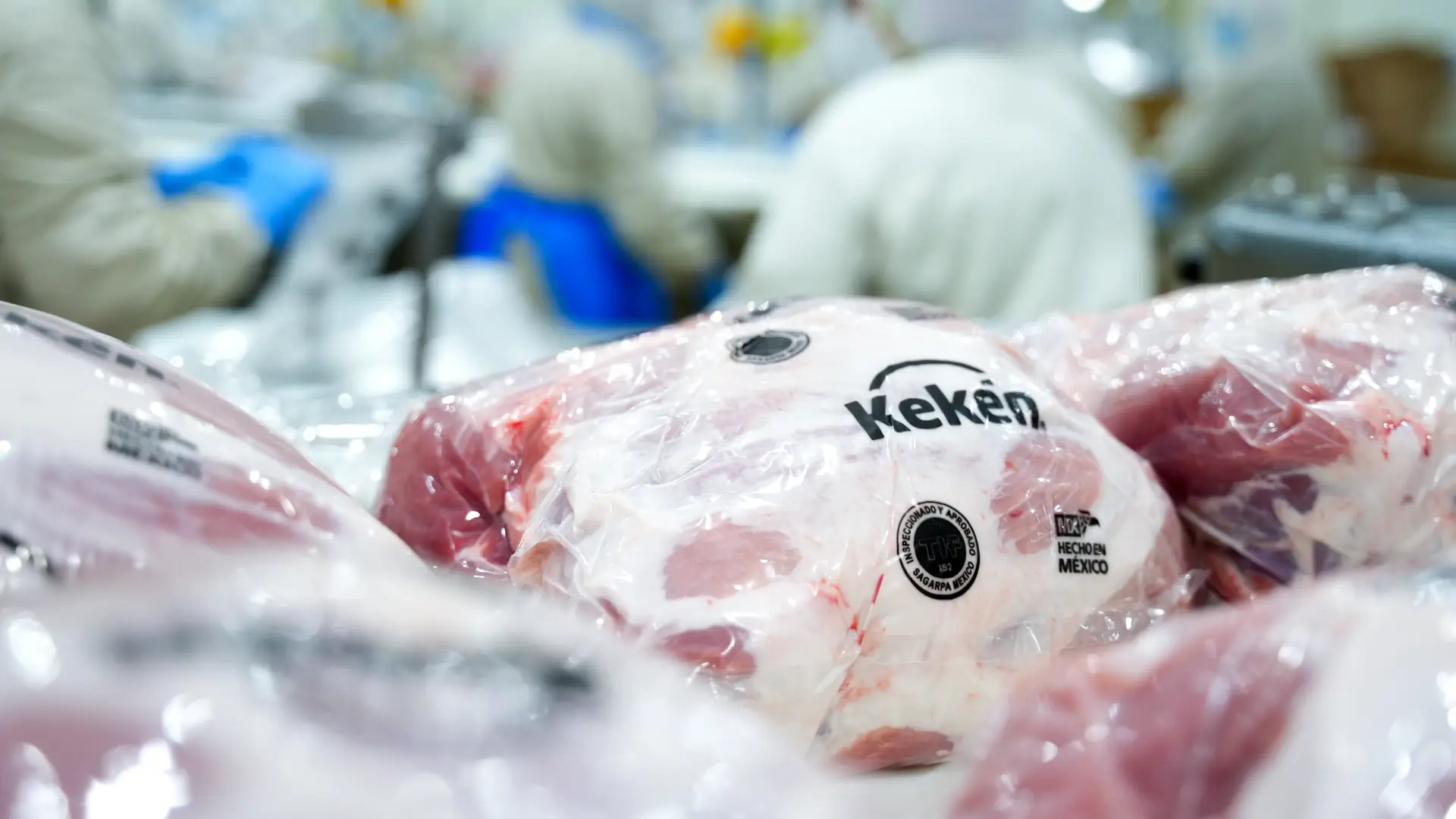
To ensure the safety and quality of our products, we operate under a comprehensive management framework including a Food Safety Management System certified under the FSSC 22000 scheme. This system integrates policies, procedures, and operational controls aligned with international standards, enabling the management of food safety risks throughout the entire value chain.
Food Hygiene and Safety Prerequisite Programs
We implement programs designed to ensure proper hygiene and sanitation standards for facilities, equipment, collaborators, and processes at our three processing plants. These programs are aligned with ISO/TS 22002-1, NOM-008-ZOO, NOM-009-ZOO, and NOM-194-SSA1.
Quality Control Plans
We have control plans that include critical quality, food safety, and regulatory compliance points, which are monitored at defined frequencies based on the level of risk and potential product impact.
Microbiology Programs for Products, Surfaces, and the Environment
We conduct systematic analyses of indicator and pathogenic microorganisms in accordance with applicable legislation and industry standards, complemented by additional analyses to meet specific customer requirements.
Audit Processes
We conduct internal and external audits, including audits by Mexican and international health authorities, annual FSSC 22000 recertification audits, annual animal welfare audits, and internal audits of the management system and quality processes.
Safety Culture and Institutional Strengthening
As part of our integrated quality and safety management, we have developed initiatives aimed at strengthening our organizational culture and promoting behaviors, leadership, and decision-making aligned with food safety standards at all levels of the organization. Key actions include:
Annual Food Safety Culture assessment
Monthly food safety training sessions
Quality and food safety fair, developed in collaboration with strategic suppliers
Progressive disciplinary matrix for quality
Short operational alignment briefings
Progress Toward 2025
During 2025, we strengthened our product safety and quality management through the following actions:
• We successfully passed the FSIS/USDA audit, enabling us to maintain authorization to export to the United States and preserve access to one of our strategic markets. In addition, we opened new export markets, including Nicaragua and the Philippines, expanding our geographic diversification.
• We achieved recertification in Animal Welfare at two plants and in FSSC 22000 at three plants, maintaining the international standards that support our operations.
• We increased the shelf life of vacuum-sealed products.
• We reduced the product non-conformity rate.
• We successfully passed the FSIS/USDA audit, enabling us to maintain authorization to export to the United States and preserve access to one of our strategic markets. In addition, we opened new export markets, including Nicaragua and the Philippines, expanding our geographic diversification.
• We achieved recertification in Animal Welfare at two plants and in FSSC 22000 at three plants, maintaining the international standards that support our operations.
• We increased the shelf life of vacuum-sealed products.
• We reduced the product non-conformity rate.
Goals and Priorities Through 2026
During 2025, we strengthened the quality and safety system to support commercial expansion and operational modernization. The increase in fresh products destined for the Japanese market led to stricter requirements regarding sanitary standards and shelf life, which were addressed through the reinforcement of controls, adjustments to process parameters, and greater rigor in monitoring and verification protocols.
Process automation at the Sahé plant represented a significant improvement in efficiency and operational control, accompanied by updates to control plans, risk analyses, and specialized workforce training. In addition, the Quality team’s capabilities were strengthened through training and certification programs.
Furthermore, the opening of the Philippine market consolidated the international positioning of the Pork Meat Business, supported by robust technical and regulatory management and the successful preparation of the plants for audit processes.
Looking ahead to 2026, the following priorities have been established:
· Maintain and strengthen key certifications, such as Animal Welfare and FSSC 22000, as well as ensure ongoing readiness for audits, customer visits, and inspections by national and international regulatory authorities.
· Reduce non-conformity indicators and customer complaints.
· Strengthen preventive controls and standardize best practices across facilities.
· Promote digitalization in quality and food safety management through technological tools that enhance traceability, indicator monitoring, and data-driven risk management.
· Consolidate the culture of quality and food safety by reinforcing visible leadership, continuous training, and periodic assessment of the food safety culture.
Process automation at the Sahé plant represented a significant improvement in efficiency and operational control, accompanied by updates to control plans, risk analyses, and specialized workforce training. In addition, the Quality team’s capabilities were strengthened through training and certification programs.
Furthermore, the opening of the Philippine market consolidated the international positioning of the Pork Meat Business, supported by robust technical and regulatory management and the successful preparation of the plants for audit processes.
Looking ahead to 2026, the following priorities have been established:
· Maintain and strengthen key certifications, such as Animal Welfare and FSSC 22000, as well as ensure ongoing readiness for audits, customer visits, and inspections by national and international regulatory authorities.
· Reduce non-conformity indicators and customer complaints.
· Strengthen preventive controls and standardize best practices across facilities.
· Promote digitalization in quality and food safety management through technological tools that enhance traceability, indicator monitoring, and data-driven risk management.
· Consolidate the culture of quality and food safety by reinforcing visible leadership, continuous training, and periodic assessment of the food safety culture.
Pork Meat - KEKÉN
GRI 416-1, 416-2
SASB FB-MP-260a.1, FB-MP-430a.2, FB-MP-410a.3,
SASB FB-MP-260a.1, FB-MP-430a.2, FB-MP-410a.3,
100% of the product categories within the Pork Meat Business are assessed based on the potential impacts they may have on customers and consumers.
Quality and safety management is a strategic pillar of the Pork Meat Business, as it ensures that products are manufactured safely, under controlled conditions, and in full compliance with applicable regulations, thereby strengthening the trust of customers and consumers.
100% of the product categories within the Pork Meat Business are systematically assessed for their potential impact on the health and safety of customers and consumers. These assessments cover non-intact raw products, intact raw products, and cooked products, taking into account the inherent risks associated with each category.
100% of the product categories within the Pork Meat Business are systematically assessed for their potential impact on the health and safety of customers and consumers. These assessments cover non-intact raw products, intact raw products, and cooked products, taking into account the inherent risks associated with each category.
Use of Antibiotics
In Pork Meat production, only antibiotics authorized by SENASICA are used, under the prescription of a licensed veterinarian and with strict adherence to withdrawal periods, ensuring animals are free of residues.
During 2025, the use of antibiotics was carried out in a responsible, controlled, and clinically justified manner. Antibiotics were not used as growth promoters nor as routine preventive treatments. All treatments were administered in accordance with established technical protocols, prioritizing preventive health measures, animal handling, and biosecurity to minimize the use of antibiotics.
During 2025, the use of antibiotics was carried out in a responsible, controlled, and clinically justified manner. Antibiotics were not used as growth promoters nor as routine preventive treatments. All treatments were administered in accordance with established technical protocols, prioritizing preventive health measures, animal handling, and biosecurity to minimize the use of antibiotics.
Certifications
We have obtained and maintained key certifications that support robust management of health and safety impacts associated with our products:
• 160 farms (company-owned, communal, and sharecropping) integrated into Kekén’s production chain are certified in Good Farming Practices (SENASICA), which is a health and quality assessment of farms that involves reviewing processes, conditions, and controls to ensure that animals and animal products are produced under safe and controlled practices.
• 160 farms (company-owned, communal, and sharecropping), transport operations, and 2 processing facilities are certified in Animal Welfare, which involves a verification process of production units' compliance with humane handling standards, considering facilities, transportation, and slaughter at each stage of the production cycle.
• 3 feed facilities certified in Good Manufacturing Practices, which is an evaluation of industry best practices to preserve the quality and safety of manufactured feed.
• 3 facilities supplying feed to all farms are certified in HACCP (Hazard Analysis and Critical Control Points), which includes verification of safety conditions and the necessary controls throughout the feed production chain.
It is important to note that no substances classified under Categories 1 and 2 of the Globally Harmonized System of Classification and Labelling of Chemicals (GHS) are used in the Pork Meat Business. Our processes prioritize food safety and environmental protection, ensuring operations are conducted under conditions that minimize potential risks to human health and the environment. During the reporting period, no regulatory or voluntary code non-compliances related to product health and safety impacts were recorded.
• 160 farms (company-owned, communal, and sharecropping) integrated into Kekén’s production chain are certified in Good Farming Practices (SENASICA), which is a health and quality assessment of farms that involves reviewing processes, conditions, and controls to ensure that animals and animal products are produced under safe and controlled practices.
• 160 farms (company-owned, communal, and sharecropping), transport operations, and 2 processing facilities are certified in Animal Welfare, which involves a verification process of production units' compliance with humane handling standards, considering facilities, transportation, and slaughter at each stage of the production cycle.
• 3 feed facilities certified in Good Manufacturing Practices, which is an evaluation of industry best practices to preserve the quality and safety of manufactured feed.
• 3 facilities supplying feed to all farms are certified in HACCP (Hazard Analysis and Critical Control Points), which includes verification of safety conditions and the necessary controls throughout the feed production chain.
It is important to note that no substances classified under Categories 1 and 2 of the Globally Harmonized System of Classification and Labelling of Chemicals (GHS) are used in the Pork Meat Business. Our processes prioritize food safety and environmental protection, ensuring operations are conducted under conditions that minimize potential risks to human health and the environment. During the reporting period, no regulatory or voluntary code non-compliances related to product health and safety impacts were recorded.