Visión y estrategia de Sostenibilidad
Sustainability VisION
and Strategy
Visión y estrategia de Sostenibilidad Megamex
At KUO, sustainability is a key enabler of our business strategy, comprehensive risk management, and long-term value creation.
To ensure its effective integration into decision-making, we rely on a double materiality matrix that guides our priorities toward the issues of greatest strategic, financial, and operational relevance to the Group.

The analysis was conducted in 2024 based on business-specific assessments and subsequently consolidated at the Group level, reflecting the operational diversity and relative weight of each division. As a result, 20 material issues were identified that guide priority-setting, strengthen risk management, and support the Company’s resilience and competitiveness.
Visión y estrategia de Sostenibilidad
Our 2024 Annual Report (2024 Integrated Annual Report) presented a more detailed description of the process for of the double materiality analysis, as well as the classification of the identified issues according to their relevance and impact.
Sustainability
ModeL
GRI 2-22, 2-23, 2-29, 3-1, 3-2
Modelo de sostenibilidad
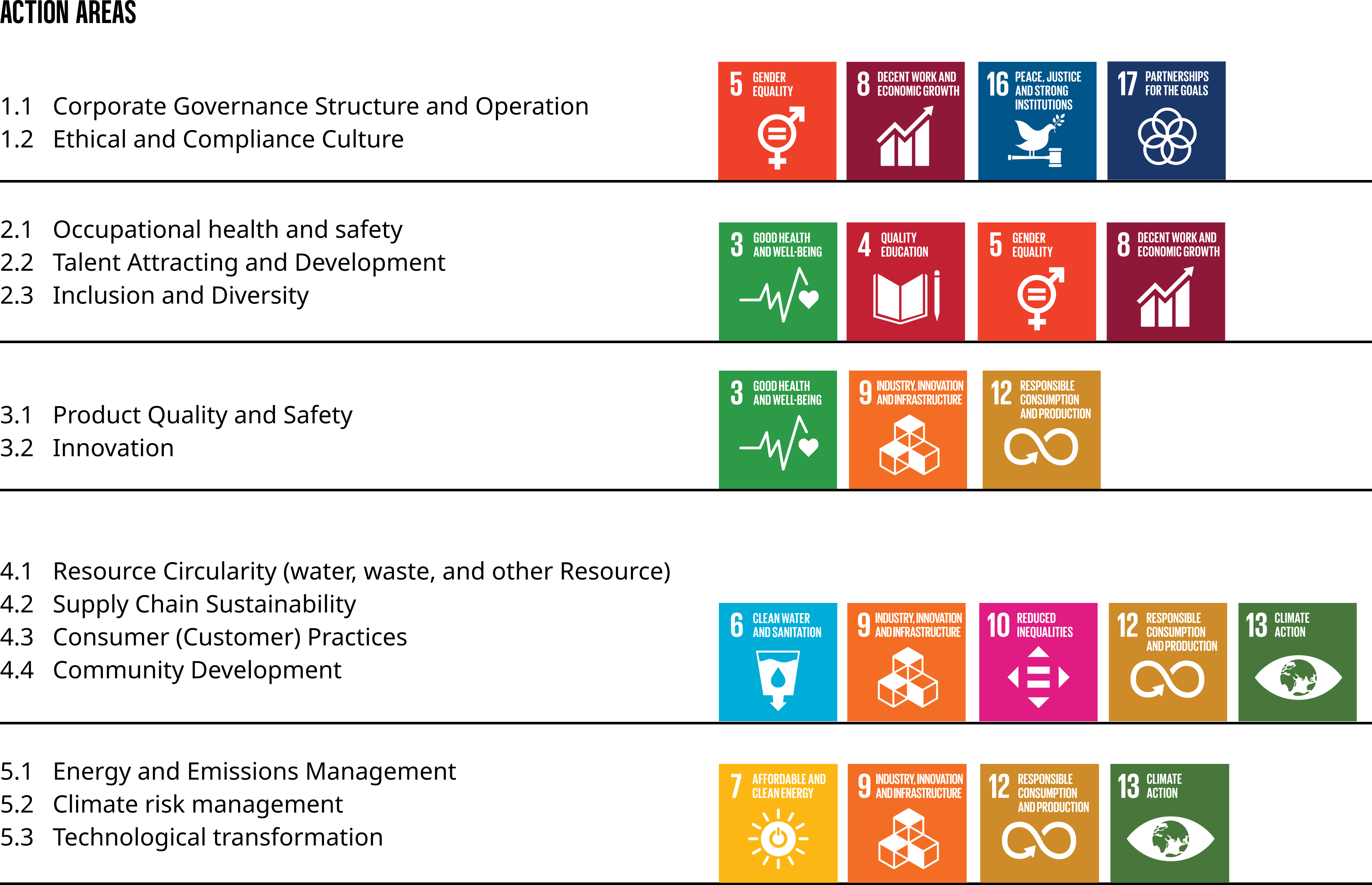
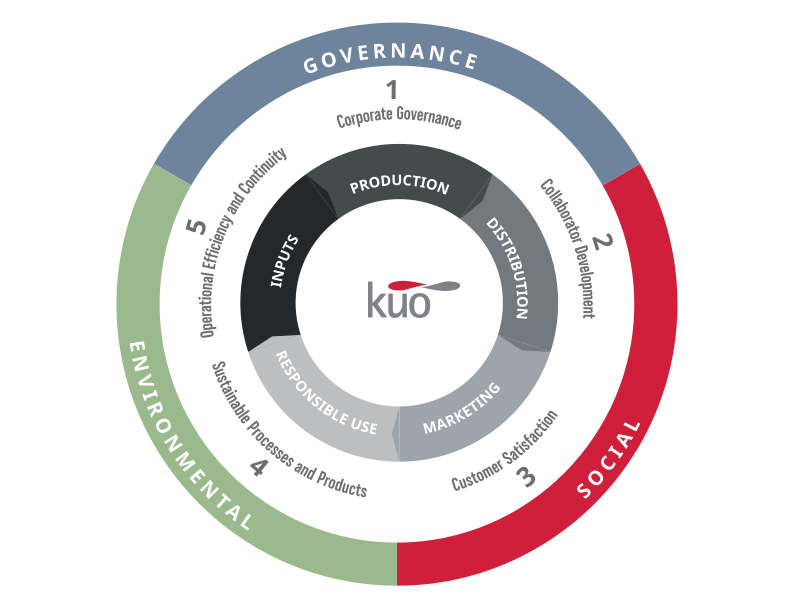
This initiative strengthened our Sustainability Model, which integrates cross-cutting priorities at the Group level and incorporates business-specific strategies. KUO’s Sustainability Model, reviewed and approved by the board of directors, is structured around five strategic pillars: Corporate Governance, Collaborator Development, Customer Satisfaction, Sustainable Processes and Products, and Operational Efficiency and Continuity, aligned with environmental, social, and governance dimensions. Each pillar has specific lines of action, aligned with the Sustainable Development Goals (SDG).
KUO - Sustainability - Chart
Through this model, we enhance transparency and discipline in the management of sustainability matters by identifying, assessing, and addressing in a timely manner the risks and opportunities that may impact business performance. This approach contributes to the Group’s resilience and competitiveness and enables us to adapt our strategy in a timely manner in response to regulatory, operational, and market developments.

The management of the model is based on a structured and ongoing dialogue with our key stakeholders—investors, collaborators, customers, suppliers, authorities, and society at large—allowing us to anticipate trends, align expectations, and strengthen strategic decision-making.
Strategic Implementation of the Sustainability Model
At KUO, we implement our Sustainability Model through cross-functional initiatives across the entire Group and specifications aligned with each strategic pillar, thereby ensuring a comprehensive and results-oriented approach.

These cross-functional initiatives reflect our commitment to the environment and the community, strengthen our culture of sustainability, and promote the active participation of our collaborators. Among these initiatives, we highlight that:

We planted more than 5,000 trees, actively involving more than 1,200 volunteers.

We organized the collection of approximately 20 tons of waste in coastal areas of Yucatán, Campeche, Quintana Roo, Veracruz, and Tamaulipas.

We installed waste sorting stations and developed recycling training programs for children's communities.

We encouraged the participation of more than 100 collaborators in planting approximately 60 species in educational gardens.
 
The following section describes the main initiatives by focus area, highlighting the most significant progress and their contribution to the Group’s sustainable performance.
Corporate Governance
Collaborator Development
Customer Satisfaction
Sustainable Processes and Products
Efficiency and Operational Continuity
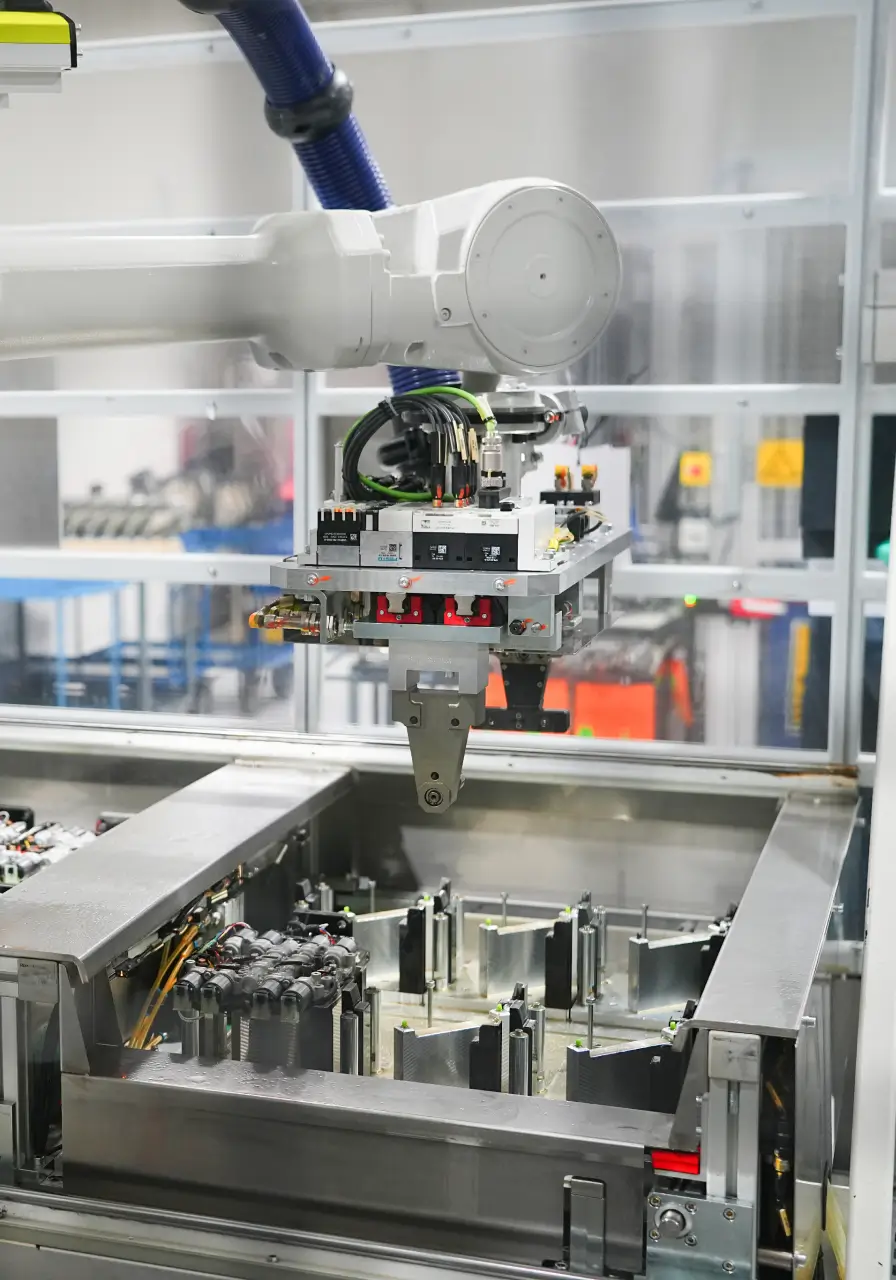
We work with specialized teams that drive technological adoption, innovation, and product design, regularly evaluating initiatives based on clear criteria of scope, efficiency, and productivity.
In collaboration with Universidad Panamericana, we delivered the course “Innovation and Transformation in Business” and participated as speakers in various industry forums.
We strengthened the operations of the Pork Meat Business’s call center, which contributed to a 35% increase in home delivery sales in 2025.
Innovation in
the Value Chain
GRI 3-3
The innovation strategy is implemented across the entire Group, and it adapts to the specific characteristics of each business.
Through specialized teams and corporate project committees, we evaluate and prioritize initiatives based on clear criteria of impact, efficiency, cost reduction, and productivity improvement, enabling a disciplined allocation of resources and consistent execution.

During 2025, we made progress in adopting enabling technologies that strengthen our value chain, incorporating approaches such as Design Thinking, Industry 4.0, process digitization, additive manufacturing, artificial intelligence, and hyper-automation. These tools drove the optimization of production processes, increased operational flexibility, and improved product quality and traceability.

We also maintained an active focus on Sustainable Supply Chain management, fostering transparent and mutually beneficial relationships with suppliers and distributors, and incorporated sustainability commitments.

Likewise, we promote a culture of innovation as a shared value within the organization by strengthening internal capabilities, highlighting the following:
Visión y estrategia de Sostenibilidad
Procurement
Practices
GRI 204-1, 308-1, 414-1
At KUO, we manage procurement with a focus on efficiency, resilience, and responsibility, integrating quality, competitiveness, and sustainability criteria into the selection and management of suppliers.

As part of this approach, we measure the proportion of spending allocated to local suppliers, with the aim of strengthening operational stability, reducing supply risks, and improving logistics efficiency.

We are also making progress in integrating environmental criteria into the supply chain through the mandatory signing of an ESG Letter, available on our website, which serves as a mechanism for suppliers to commit to environmental standards. By 2025, more than 560 suppliers had signed this charter, thereby strengthening transparency, traceability, and preventive risk management.